You can track the metrics of your ClickUp subtasks as you would track the metrics of your top-level tasks. By setting a filter, you can set screenful charts to display information about your subtasks, top-level tasks, or both.
Creating charts from both ClickUp tasks and subtasks
You can create charts based on your top-level tasks or subtasks. Here’s an example Task List that contains both tasks and subtasks of a ClickUp project:
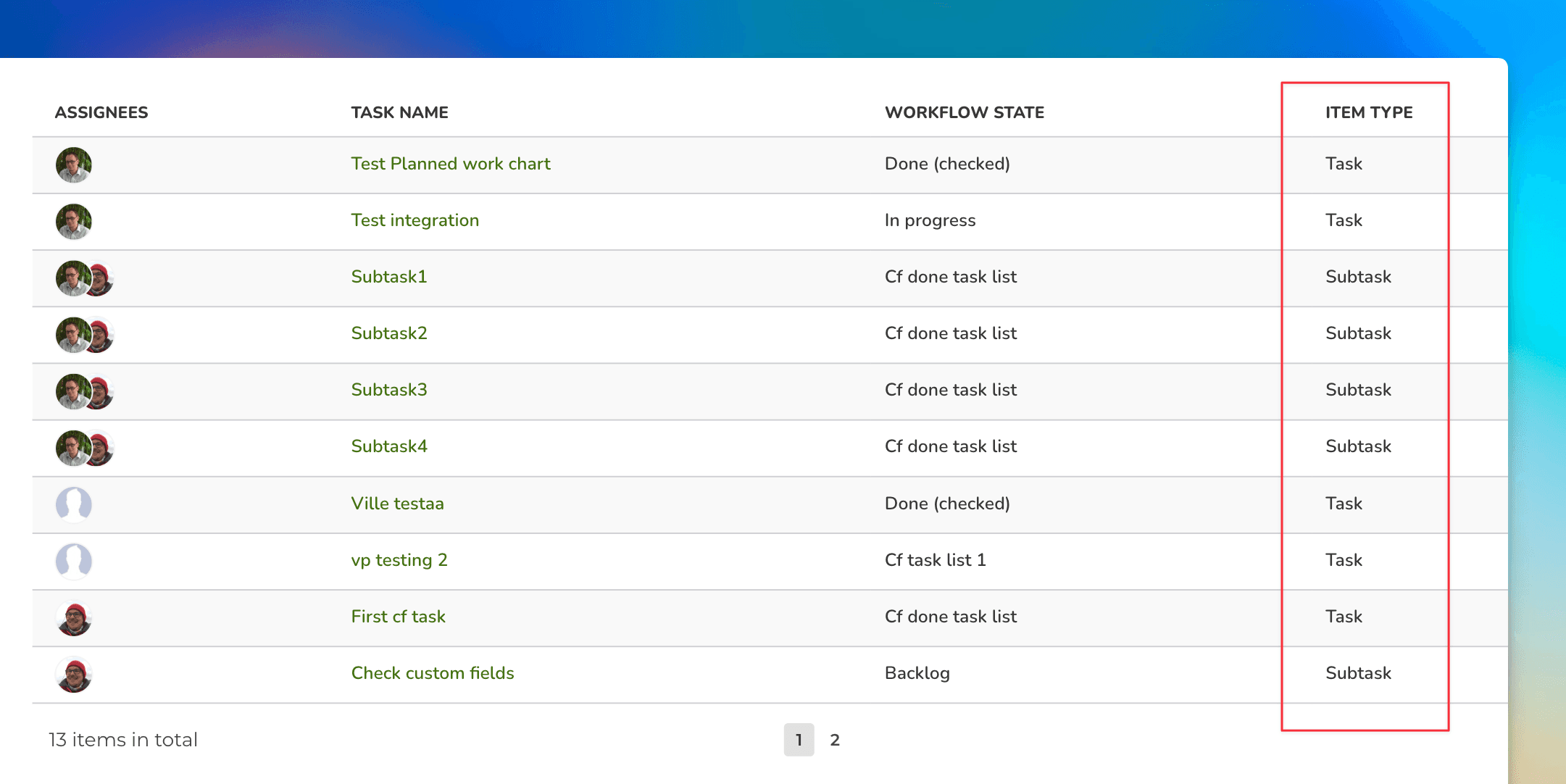
The rightmost column shows the item type: Task or Subtask.
With the charts that support grouping, such as pie chart or bar chart, you can group data by item type. This shows the distribution of your tasks and subtasks in your data:
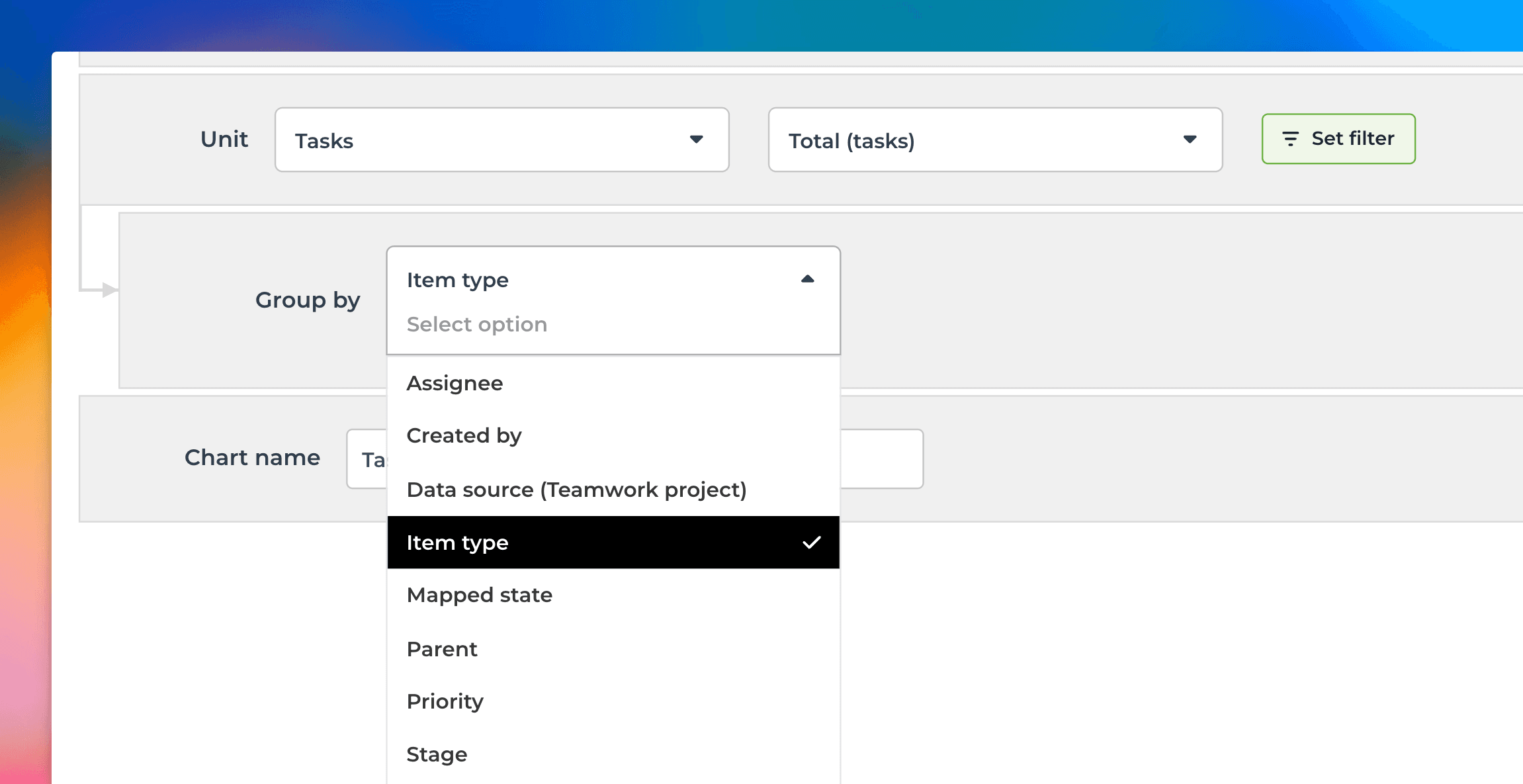
Here’s an example bar chart, grouped by the item type:
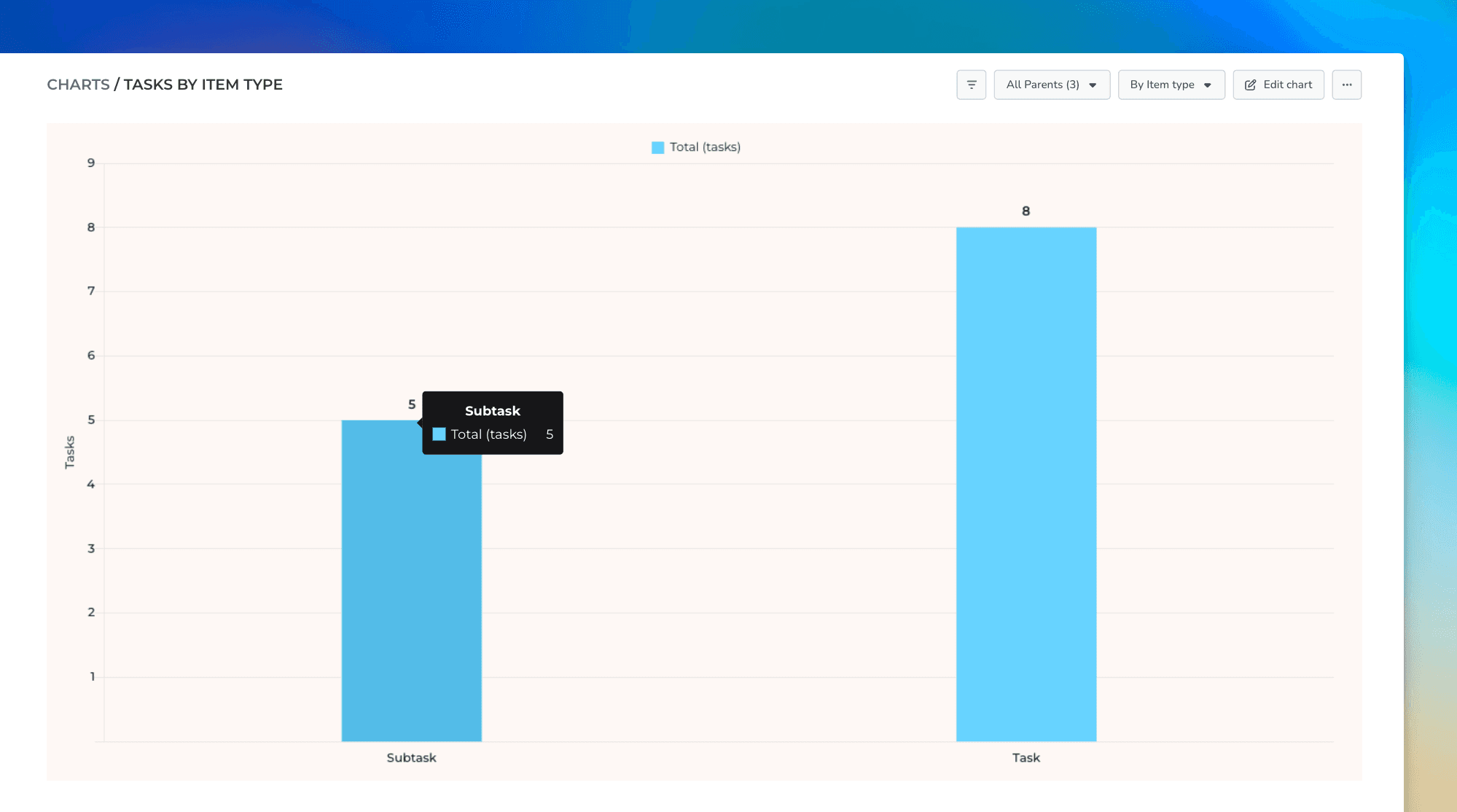
Charts are clickable. You can click a bar to drill into the individual tasks.
Rolling up values from subtasks
You can roll up values from subtasks by selecting Parent as the row in the Table chart.
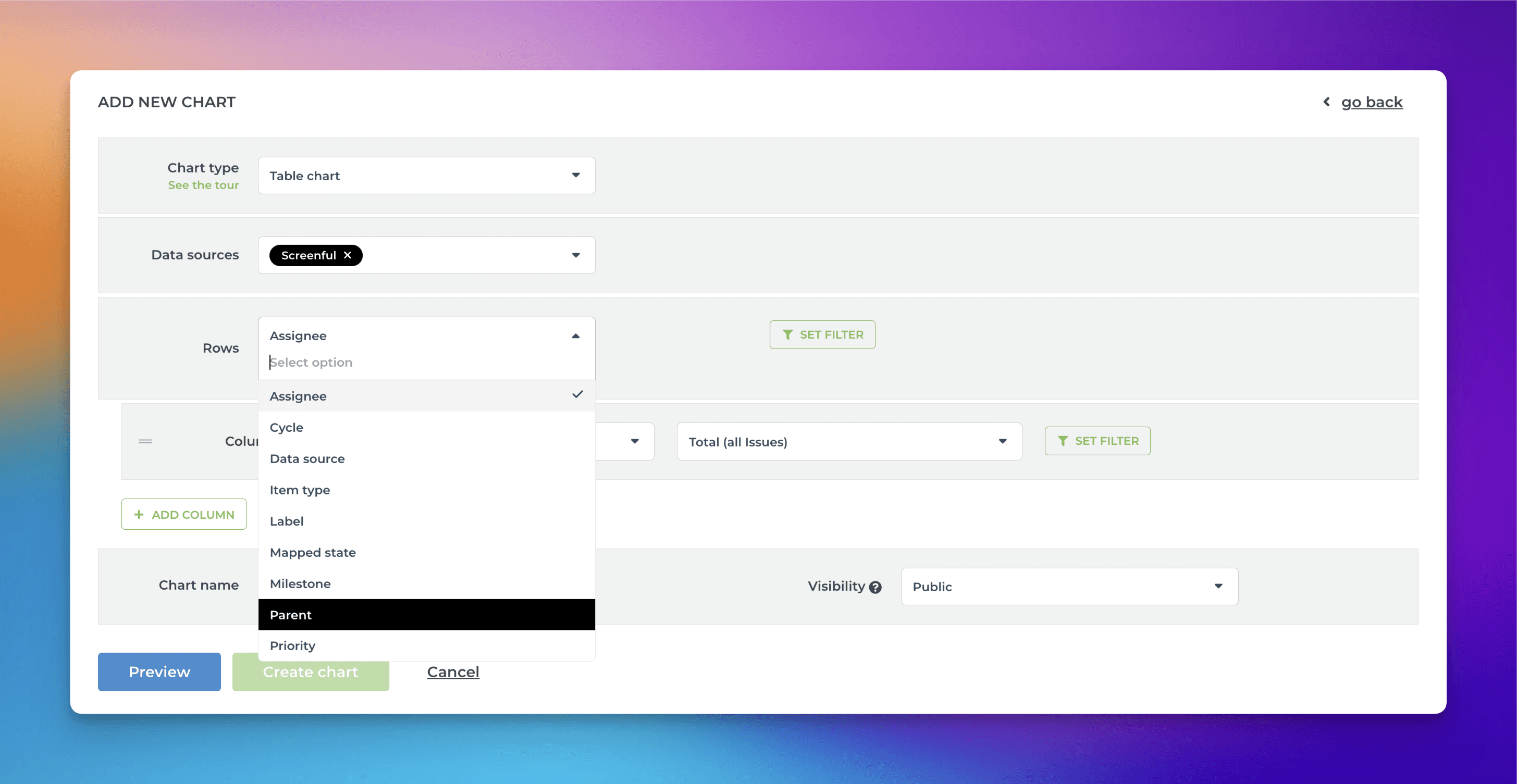
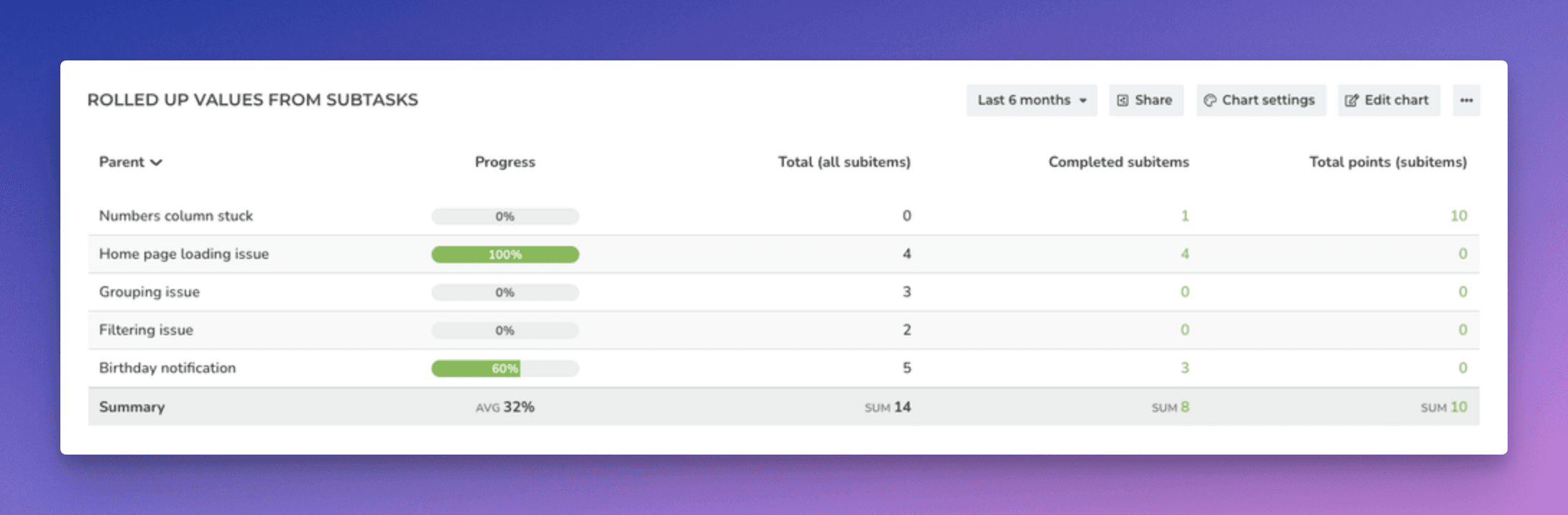
Now each row in the table corresponds to the top-level task, and the metrics shown in columns are the summaries from the subtasks. For example, a column can show the total number of subtasks for a parent, the total number of completed subtasks, or the number of story points assigned to subtasks.
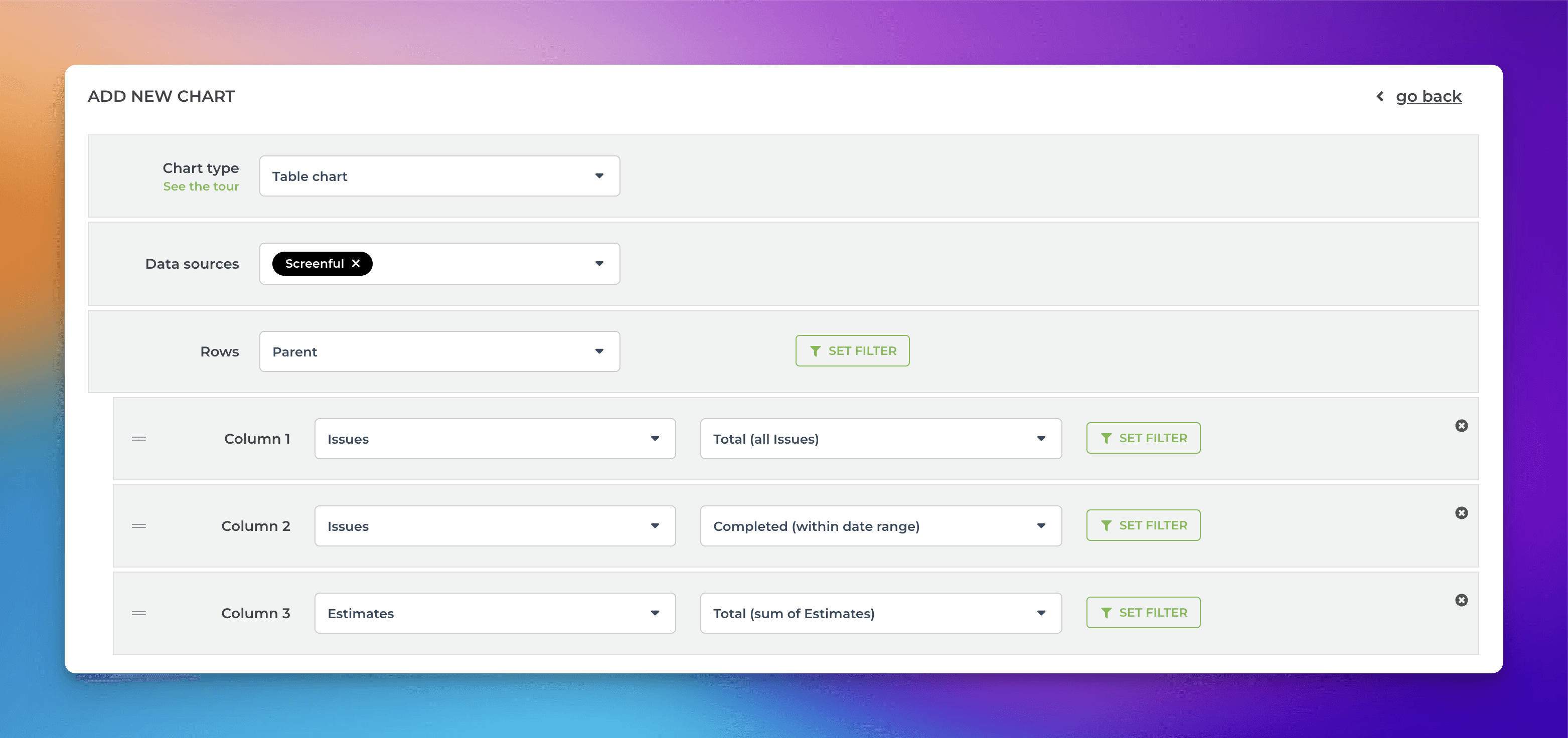
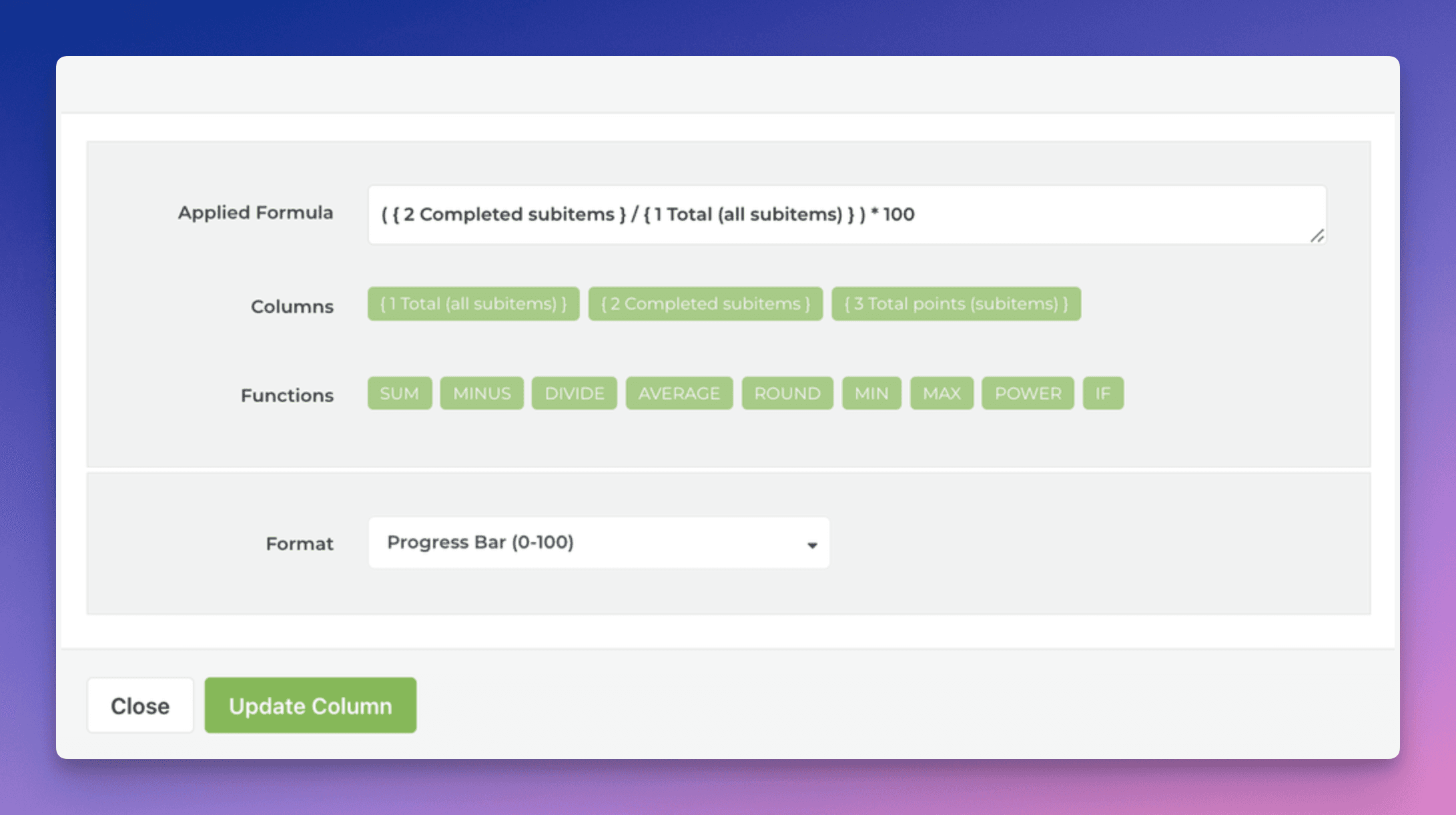
The columns are configurable, so you can roll up any available metrics from subtasks. The progress bar can be used to show the completion percentage of the subtasks. It can be added to the chart by applying a formula:
Here’s the final chart:
Filtering by subtasks
In the chart settings, you can include or exclude subtasks using the item type filter:
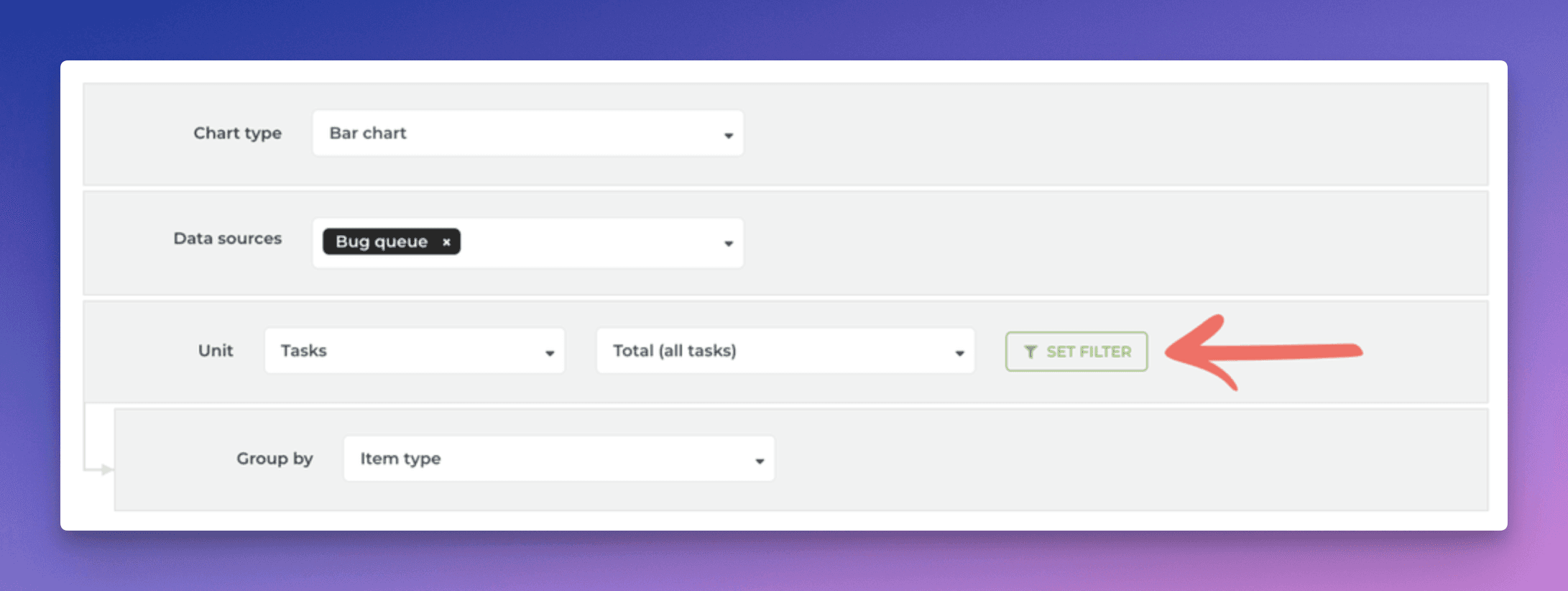
Clicking Set filter opens the filter modal. Select Item type from the filter options:
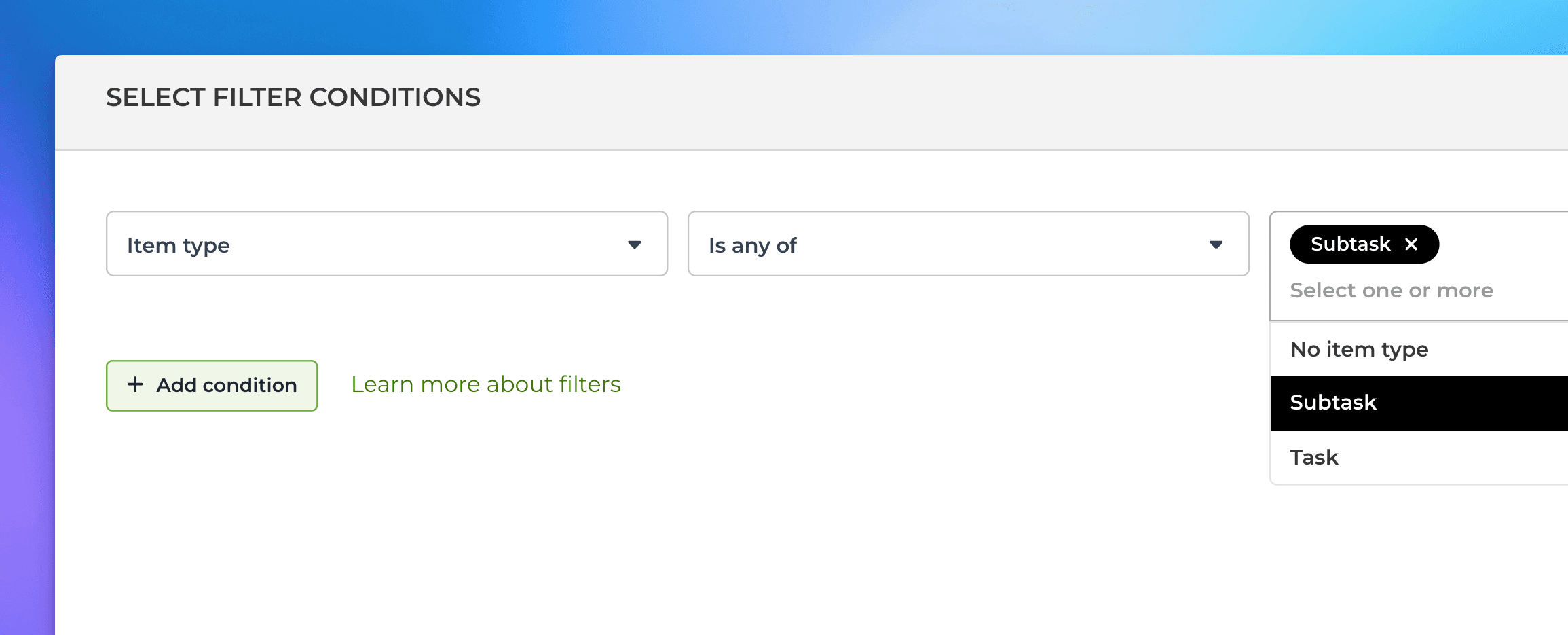
When you select Subtask, the chart is filtered accordingly.
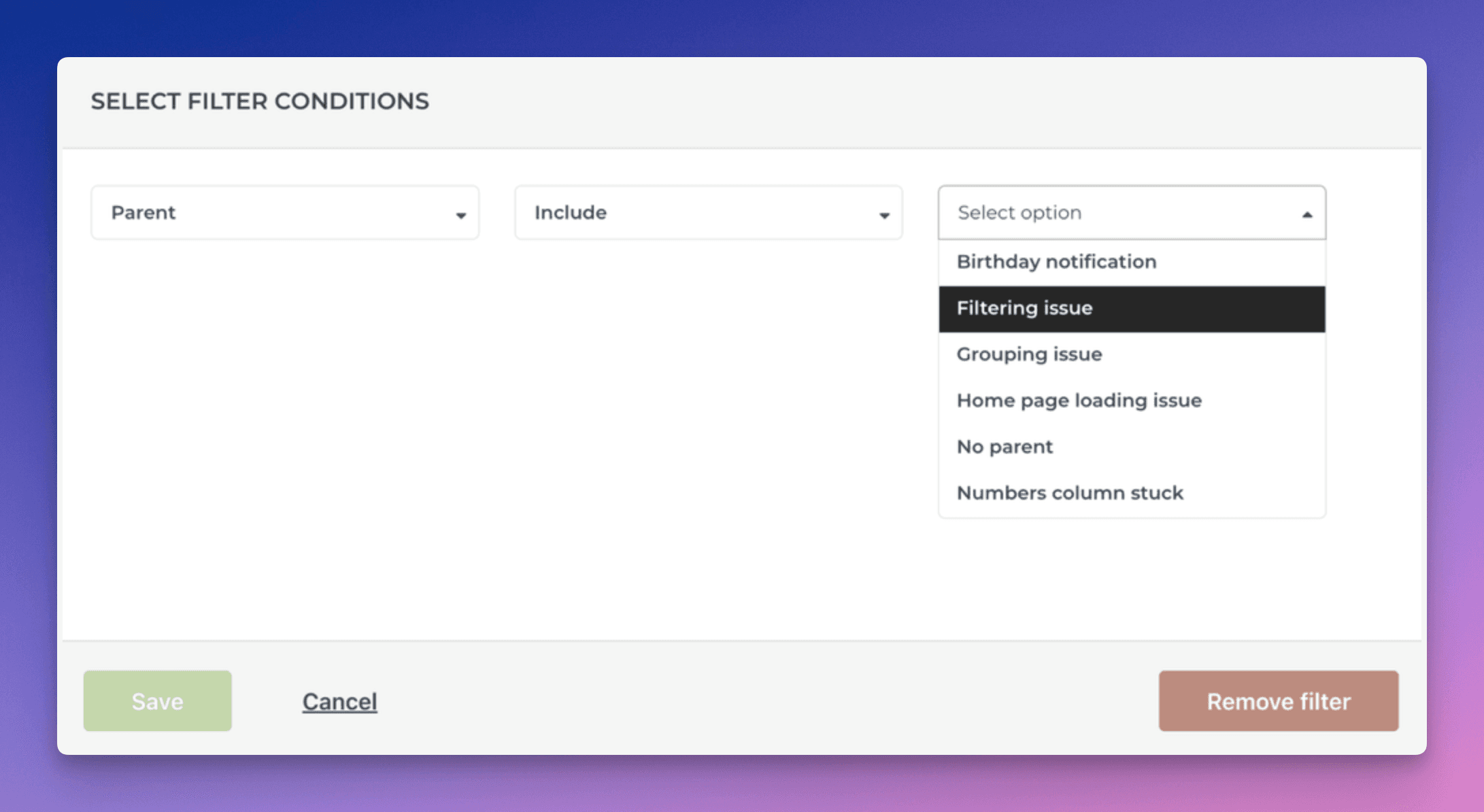
Similarly, you can also filter by subtasks’ parents (top-level tasks):
About Screenful
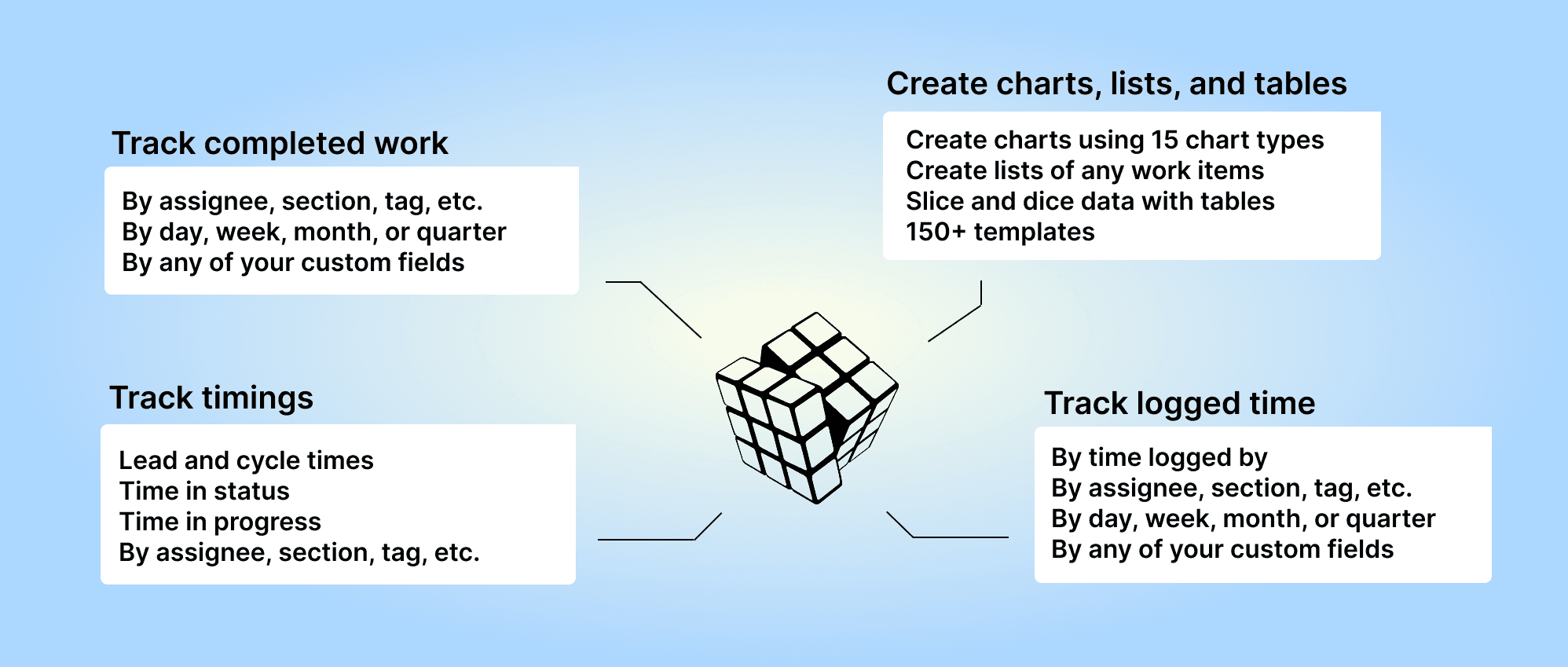
Screenful provides AI-assisted analytics for data in ClickUp. You can slice & dice your data with 15 different chart types and click through to drill into details.
Learn more
Need help with setting up Screenful?
Book a call with our expert. Click here to schedule the onboarding call.
Screenful MCP server is coming soon
Use your Screenful project data inside your favorite AI tools. Join the waitlist.